
An MVP, a minimum viable product, is the smallest thing you can put in front of real users to learn something true, not a shrunken, half-broken version of your eventual vision. The founder who coined the modern usage, Eric Ries, defined it as the version of a product that lets a team collect the most validated learning about customers for the least effort. Read that twice, because the goal in the name is learning, not launching. The fastest route to one is to find your single core loop, the shortest path from a new user to the value they came for, build only that loop, get it in front of a handful of real people quickly, and let what they actually do decide what comes next. It goes wrong in exactly two ways: building too much before anyone touches it, and building so little that it delivers no value and teaches you nothing.
The short version
- An MVP is a learning tool, not a small copy of the finished product. Its job is to replace your guesses with evidence as cheaply as possible.
- Find the core loop first. Sign up, do the one valuable action, get the value. That chain is your MVP; everything else is later.
- Ship for learning, not completeness. Five real users doing something beat fifty hypothetical ones agreeing with you in a meeting.
- Watch behavior, not opinions. What people do in the product tells you the truth; what they say they would do frequently does not.
- The two failure modes are opposite and equally fatal. Over-building bets everything on unvalidated guesses; under-building delivers nothing worth reacting to.
- Buy everything that is not your idea. Your build time should go into the core loop, not into re-creating authentication, payments, or email.
What is an MVP, really, and what is it not?
The phrase gets abused, so it is worth being precise. An MVP is not a prototype, a proof of concept, or an early beta, even though people use the words interchangeably. A prototype is a mockup that demonstrates an idea, often clickable but not real, and nobody transacts on it. A proof of concept answers a narrow technical question, "can this even be built," for your own reassurance. A beta is a nearly finished product opened to testers to shake out bugs. An MVP is none of those. It is a genuinely working product, live for real users doing real things, deliberately narrowed to one valuable use case so you can learn whether the idea holds before you spend on the rest.
The definition worth memorizing comes from Eric Ries, whose book popularized the term. He describes the MVP as the version of a new product that lets a team collect the maximum validated learning about customers with the least effort. The load-bearing phrase is "validated learning." Every choice in an MVP should be judged by how much it teaches you per dollar and per week, not by how complete it makes the product feel. That single reframe kills most of the features founders agonize over, because most of them teach you nothing you could not learn later, once real usage has told you they matter.
The other half of the name deserves equal weight. "Minimum" and "viable" pull in opposite directions on purpose, and dropping either word produces a failure. Minimum without viable is a demo that does not deliver value, so nobody uses it and you learn nothing. Viable without minimum is the full product you spent a year building on faith. The art is holding both at once: the smallest thing that is nonetheless genuinely useful to someone.
How do you find the core loop?
Write down, in one sentence, the single most important thing a user comes to your product to accomplish. Not the five things it might eventually do, the one thing that is the reason it exists at all. For a scheduling tool it might be "a client books an available slot without emailing back and forth." For an invoicing product, "a freelancer sends a professional invoice and gets paid." That one accomplishment is your north star.
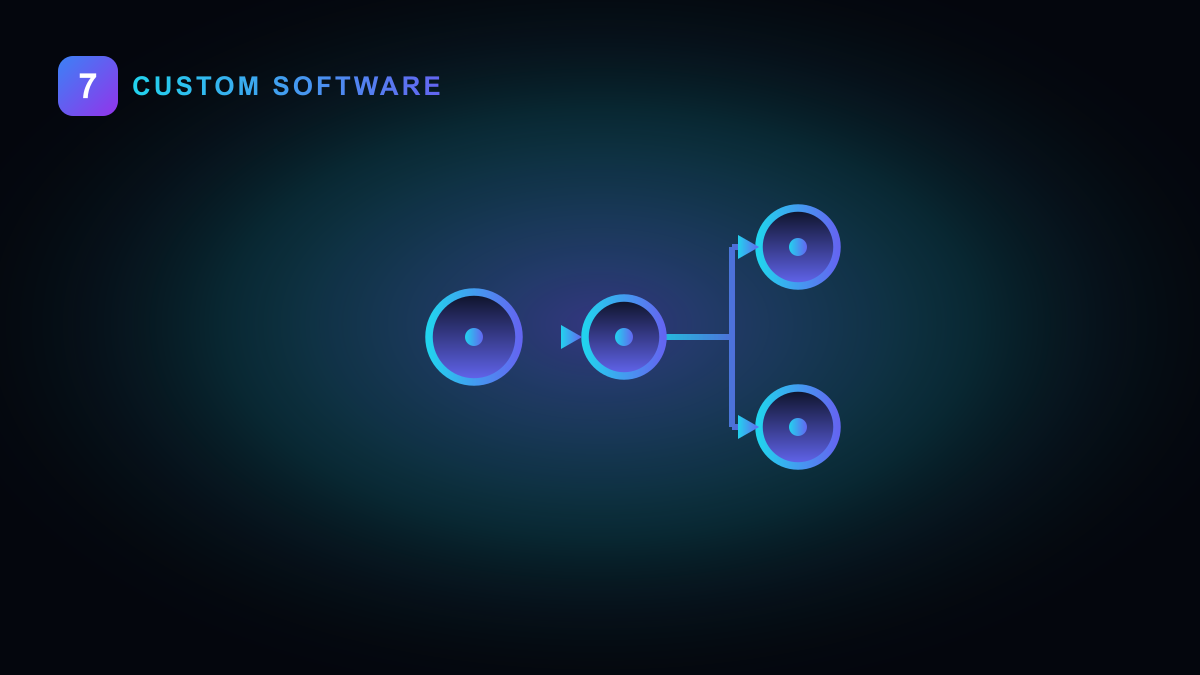
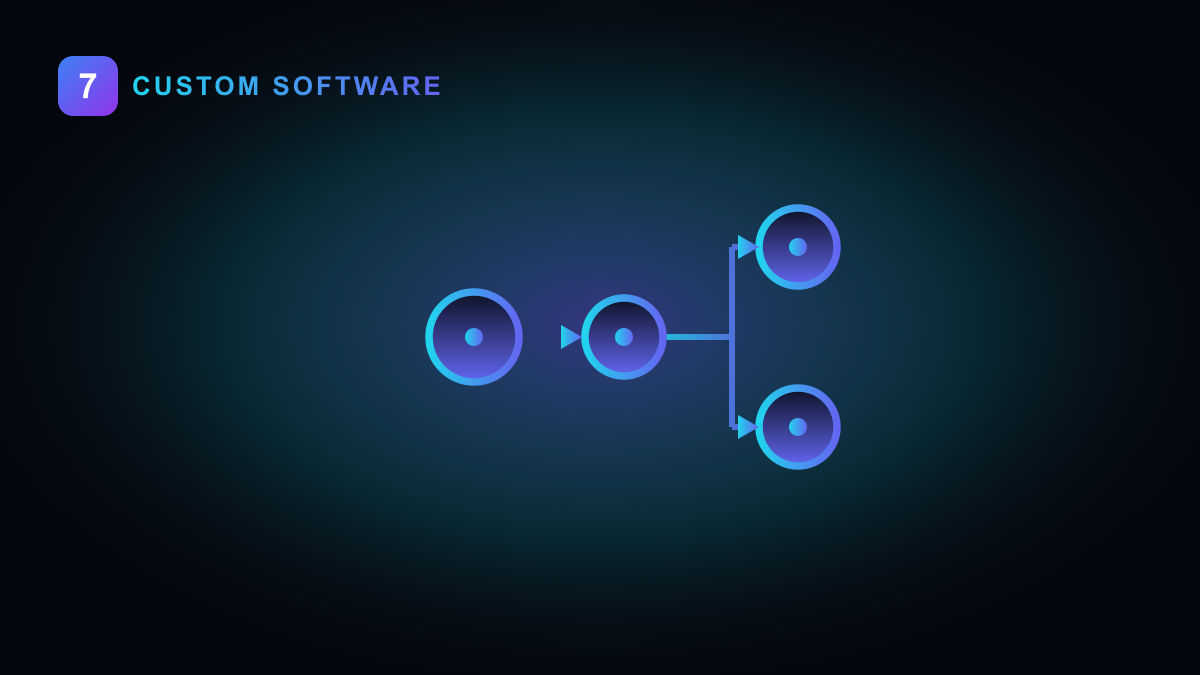
Now map the shortest possible path a brand-new user takes to reach it: sign up, do the core action, get the value. That chain, and only that chain, is your MVP. It is deliberately unglamorous. There is no settings page with forty options, no second user type, no admin analytics dashboard, no onboarding tour, because none of those are on the path from arrival to value. The test for every feature anyone proposes is a single question: if we removed this, would a user still be able to complete the core loop and get the value? If yes, it is not part of the MVP, however much it would improve the eventual product. It goes on the list for later, when evidence tells you it earns its place.
This is where founders feel the discomfort, because the core loop always looks too small to be impressive. That feeling is the point. One workflow that genuinely works, end to end, is worth more than ten that half-work, because a working loop changes how a real person operates today and produces the usage you need to learn from. The mechanics of choosing and pricing that first slice as a real project, rather than just naming it, are the subject of our deeper guide to scoping a first phase that pays for itself, which picks up exactly where this article's mindset leaves off.
Why build for learning instead of completeness?
The most expensive mistake in software is not writing bad code. It is polishing features nobody wanted, which is what happens when you build for completeness, working through a full feature list, instead of building for learning, shipping the core loop and watching what real usage reveals. Completeness feels like progress because the list gets shorter, but every item built on an untested assumption is a bet placed before you were allowed to see the cards.
Building for learning inverts the sequence. You ship the rough-but-real core loop, put it in front of actual users, and then, crucially, watch what they do rather than asking what they think. This distinction is the one founders find hardest to honor. People are generous and imaginative in interviews; they will tell you they love an idea, would definitely use it, would happily pay. Then the product ships and they do not touch it, because saying yes to a hypothetical costs nothing and changing your actual behavior costs effort. Real usage is the only feedback that has skin in it. Someone who signs up, completes the core action unprompted, and comes back has told you something true; someone who praised your pitch deck has told you they are polite.
That is why five real users beat fifty hypothetical ones. The five are running an experiment on your assumptions in the real world, and their behavior, where they get stuck, what they ignore, what they come back for, is worth more than any amount of pre-launch planning, because it is evidence rather than opinion. Once the product is live you are no longer guessing, and every support question and usage pattern is data pointing at what to build next.
What should you actually measure?
"Watch what users do" is only useful if you know which behavior to watch, and the answer is narrower than most dashboards suggest. The metric that matters for an MVP is whether users reach the value in your core loop, activation, not vanity numbers that feel good and prove nothing.
Signups are a vanity metric on their own, because a signup is someone expressing curiosity, not receiving value. Page views, trial starts, and social followers are the same: they measure interest, not whether the thing works. The number that tells you the truth is how many people who arrive actually complete the core action and get the value it promises, and then whether they come back to do it again. If a hundred people sign up and three complete the core loop, you do not have a marketing problem, you have a product that is not delivering, and no amount of traffic fixes that. If ten sign up and eight complete the loop and half return next week, you have something real even at tiny numbers, and now growth is worth pursuing.
So instrument the core loop before you launch: know how many start it, how many finish it, and how many return. Everything else can wait. Keeping this focus is also the cheapest protection against the slow feature-by-feature expansion that quietly wrecks timelines, the dynamic we dissect in how scope creep kills software projects, because a metric tied to the core loop gives you a principled reason to say "not yet" to everything that does not move it.
From idea to first users, step by step
- Write the one-sentence core outcome. The single thing a user comes to accomplish, in plain words. If you cannot say it in a sentence, you do not yet know what you are building.
- Map the shortest path to it. Sign up, do the core action, get the value. List those steps and nothing else.
- Cut everything off the path. For each feature you are tempted by, ask whether the core loop works without it. If yes, it is later, not now.
- Buy the infrastructure. Use proven services for authentication, payments, email, and hosting rather than building them, so your effort goes into the loop that makes the product yours.
- Instrument the loop. Before launch, make sure you can see how many users start, finish, and return to the core action.
- Ship it to a handful of real users, fast. Not a public launch, a small group of people who genuinely have the problem. Speed to first real usage matters more than polish.
- Watch behavior, then decide v2 from evidence. Where they stick, what they ignore, what they return for. Let that, not your pre-launch guesses, set what you build next.
An MVP cut-or-keep gut-check
For every feature fighting to be in the first version, run it past these. Any "no" is a strong signal to defer it.
- Does the core loop genuinely break without this feature, or is it just nicer with it?
- Will building this teach you something you cannot learn more cheaply after launch?
- Is this solving a problem real users have already shown you, or one you are imagining they will have?
- Could a proven third-party service handle this instead of your own build time?
- If you shipped without it, could a real user still get the value they came for?
- Is this on the path from arrival to value, or is it admin, polish, or a second use case in disguise?
Common pitfalls
Building for the launch you imagine instead of the user you have. This is the classic and most expensive trap, and it usually looks responsible from the inside. A founder we talked to spent roughly eight months building before showing the product to anyone: multiple user roles, a configurable admin panel, tiered billing, an analytics dashboard, all the scaffolding of a mature product. It was careful, competent work. When it finally launched, the core thing the whole product was built around turned out not to be something users actually wanted done that way, and every month of polish on the surrounding features was wasted, because it was polish on an unvalidated guess. Had the core loop shipped to ten real users in month two, that same lesson would have cost eight weeks instead of eight months and left plenty of runway to pivot. Over-building does not feel like recklessness while you do it. It feels like diligence, which is exactly what makes it dangerous.
Under-building into meaninglessness. The opposite error is shipping something so bare it does not actually deliver the value, a signup form with nothing real behind it, a loop that breaks halfway. Users bounce, and because they never reached the value, their bouncing teaches you nothing about whether the idea works. "Minimum" and "viable" carry equal weight, and stripping past viable is not lean, it is just launching noise.
Mistaking enthusiasm for validation. Friends, advisors, and interviewees will tell you the idea is great, and that praise feels like evidence. It is not. The only validation that counts is a stranger with the problem using the product and coming back. Build the thing that lets you observe that behavior, and weigh it above every encouraging conversation.
Reinventing infrastructure to feel productive. Building your own login system or payment flow feels like real progress and is a way of avoiding the harder, scarier work of testing whether anyone wants your actual idea. Buy those parts, and spend the saved time where the risk actually lives, which is almost never the plumbing. If you are unsure how far no-code and off-the-shelf pieces can carry the non-core parts, the limits of no-code maps where the line usually falls.
FAQ
What exactly is a minimum viable product?
It is the smallest working version of a product that delivers real value for one core use case and lets you learn from actual usage, defined by Eric Ries as the version that yields the most validated learning for the least effort. It is not a prototype, a proof of concept, or a rough beta; it is a genuinely usable product deliberately narrowed to one valuable job. Both words matter equally: minimum keeps it small and cheap to build, viable keeps it useful enough that people actually use it, which is the only way it can teach you anything.
How small should an MVP be?
As small as it can be while still delivering the core value end to end, and no smaller. The right size is the single core loop, the shortest path from a new user signing up to getting the value they came for, with everything off that path deferred. If a feature can be removed and a user can still complete the loop and get value, it does not belong in the MVP. This almost always feels uncomfortably minimal, which is the correct feeling; one workflow that genuinely works beats a broad product where everything half-works.
What is the difference between an MVP and a prototype?
A prototype is a mockup that demonstrates an idea, often clickable but not functional, used to show a concept or gather early reactions, and nobody does real work on it. An MVP is a genuinely working product that real users use to accomplish a real task, built to test whether the idea holds up in actual use rather than in a demo. The distinction matters because they answer different questions: a prototype tests whether people like the idea when you describe it, while an MVP tests whether they change their behavior when they can actually use it, and only the second is validation.
How do I avoid over-building my MVP?
Anchor every decision to the core loop and to learning. Write the one outcome a user comes for, map the shortest path to it, and refuse to build anything off that path until real usage tells you it matters. Buy infrastructure instead of building it, ship to a small group of real users far earlier than feels comfortable, and treat the first launch as an experiment rather than a finished product. The discipline that saves you is shipping the rough core loop to real people in weeks, because their behavior corrects your guesses while they are still cheap to change, before you have poured months into unvalidated features.
What should I measure after launching an MVP?
Measure whether users reach the value in your core loop, activation and return, not vanity metrics like signups or page views that reflect interest rather than value delivered. Instrument the loop before launch so you can see how many users start the core action, how many complete it, and how many come back to do it again. A high completion and return rate at tiny numbers means you have something real worth scaling; a low completion rate despite plenty of signups means the product is not delivering, which is a signal to fix the loop rather than chase more traffic.
This ship-small-then-learn approach is exactly how I prefer to build with founders: define the core loop, get to a real MVP quickly, and grow from evidence. If you have an idea you want in users' hands, tell me the one job it needs to do and we will scope the smallest version that proves it. When you are ready to turn that idea into a concrete, priced first phase, the scoping guide is the deep-dive, and the practical steps of a build, from writing plain-language requirements through how we build custom software step by step to what it actually costs, are covered in their own articles.